Unit 4 Essential Questions
Unit 4 Essential Question
What is the origin and evolution of the Internet?
The history of the Internet begins with the development of electronic computers in the 1950s. Initial concepts of wide area networking originated in several computer science laboratories in different nations. The Internet started as a US government funding for researching network in 1969. The working first prototype of the internet came with the creation of ARPANET. This was the start of the wireless information network as the ARPANET allowed multiple computers to communicate to each other through a single network. This ARPANET soon became the thing we now call "emails". The ARPANET adopted TCP/IP in 1983, and from there it more closely resembled the modern internet we know today. But in 1990, a man named Tim Berners-Lee invented the World Wide Web.
What platforms and systems enable world-wide networking?
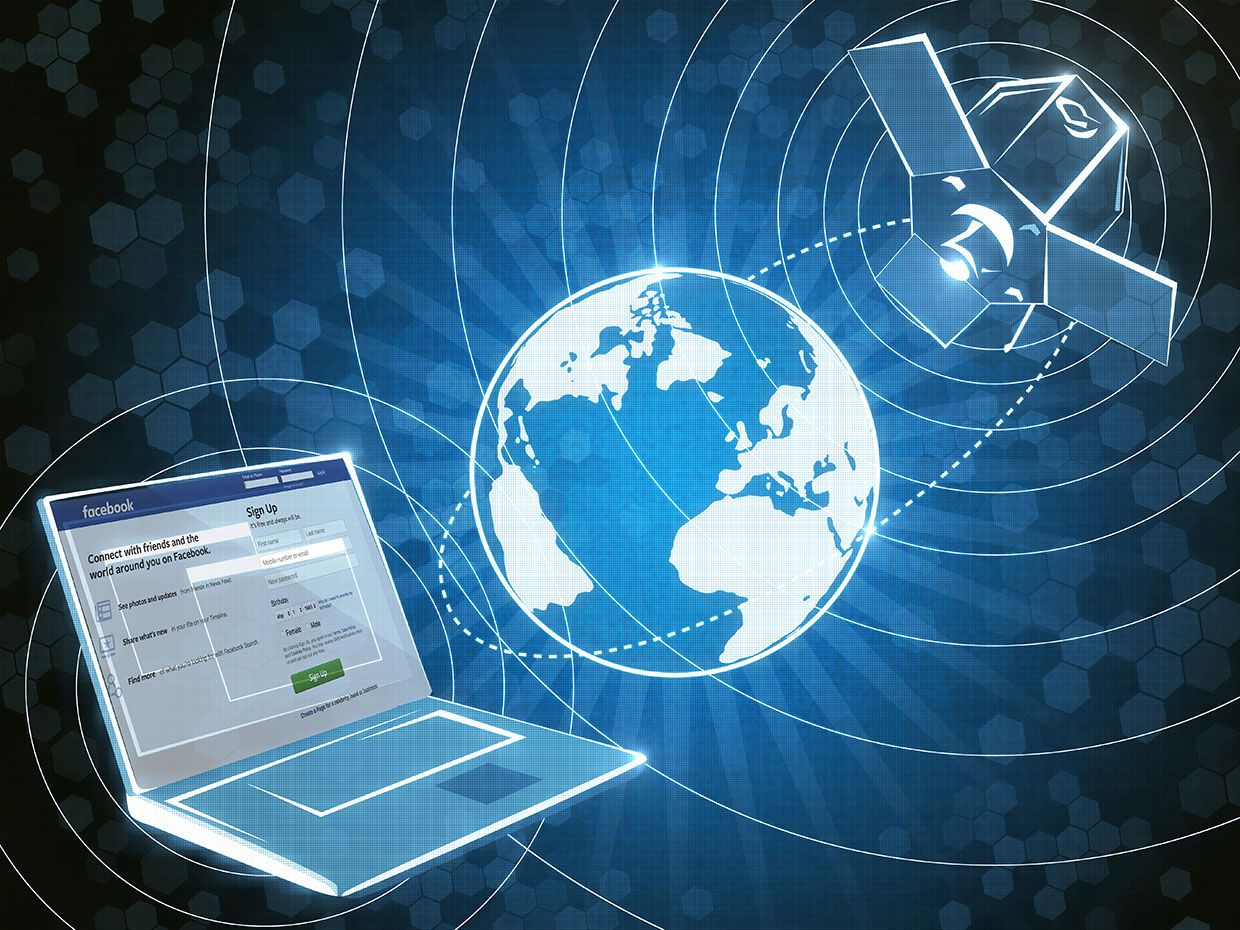
The World Wide Web uses Hypertext Transfer Protocol (HTTP) - a language used to transmit data - to access information that lives on different networks. We are able to access this world wide web through our ISP, or Internet service providers. Companies like Charter, AT&T, Verizon links us to there database and sends the necessary information from the provided modem to the Internet. Routers and modems give us the frequency signal- Wi-Fi - that allows users to access the internet through devices that can read these signals.

How does HTML create web pages and linked pages?
Like with any code, HTML is the code for writing websites. Through the language, we are able to create websites using specific formatting and words that will display on the website. Most websites are now coded through HTML because the language became the standard for most websites. This is because the person how made the World Wide Web, Tim Berners-Lee, coded in HTML for his browser and server software.

How do packets move on the Internet?
Packets move through the internet from one machine to another. For example, an email. The email consist of information of bytes and those bytes break down into small packets. Although the destination is the same, these packets do not need to follow the same path. This where the routers help out these packets. Routers help guide these packet to there destination through the fastest path, but if one route is congested, it will give the packets a different route to go to. Because of the fact that the packets do not need to follow a fixed path, that makes sending emails or information so fast.

What abstractions and layers are identifiable on systems of the Internet?
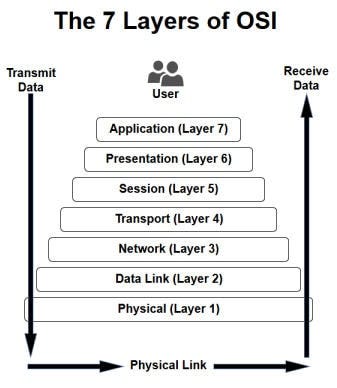
The physical layer sends the information of bits through electronically, mechanically, or using radio frequency. The data link layer sets up links in the physical layer, putting the packets into network frames. The network layer handles and addressing the data, putting them on the router and also addressing the information coming in. The transport layer manages the packaged data and checks if it has an error. It also delivers the packets. The session layer coordinates the packages. The presentation layer is where the operating system converting the data into a presentable format. The application layer sets up services where the data can be used and is communcated properly to.
What is the origin and evolution of the Internet?
The history of the Internet begins with the development of electronic computers in the 1950s. Initial concepts of wide area networking originated in several computer science laboratories in different nations. The Internet started as a US government funding for researching network in 1969. The working first prototype of the internet came with the creation of ARPANET. This was the start of the wireless information network as the ARPANET allowed multiple computers to communicate to each other through a single network. This ARPANET soon became the thing we now call "emails". The ARPANET adopted TCP/IP in 1983, and from there it more closely resembled the modern internet we know today. But in 1990, a man named Tim Berners-Lee invented the World Wide Web.
The World Wide Web uses Hypertext Transfer Protocol (HTTP) - a language used to transmit data - to access information that lives on different networks. We are able to access this world wide web through our ISP, or Internet service providers. Companies like Charter, AT&T, Verizon links us to there database and sends the necessary information from the provided modem to the Internet. Routers and modems give us the frequency signal- Wi-Fi - that allows users to access the internet through devices that can read these signals.
How does HTML create web pages and linked pages?
Like with any code, HTML is the code for writing websites. Through the language, we are able to create websites using specific formatting and words that will display on the website. Most websites are now coded through HTML because the language became the standard for most websites. This is because the person how made the World Wide Web, Tim Berners-Lee, coded in HTML for his browser and server software.
How do packets move on the Internet?
Packets move through the internet from one machine to another. For example, an email. The email consist of information of bytes and those bytes break down into small packets. Although the destination is the same, these packets do not need to follow the same path. This where the routers help out these packets. Routers help guide these packet to there destination through the fastest path, but if one route is congested, it will give the packets a different route to go to. Because of the fact that the packets do not need to follow a fixed path, that makes sending emails or information so fast.
What abstractions and layers are identifiable on systems of the Internet?
The physical layer sends the information of bits through electronically, mechanically, or using radio frequency. The data link layer sets up links in the physical layer, putting the packets into network frames. The network layer handles and addressing the data, putting them on the router and also addressing the information coming in. The transport layer manages the packaged data and checks if it has an error. It also delivers the packets. The session layer coordinates the packages. The presentation layer is where the operating system converting the data into a presentable format. The application layer sets up services where the data can be used and is communcated properly to.
Comments
Post a Comment